Engineering
Lighter than the sum of its parts.
A keel, a motor and four wishbones — and a refusal to carry anything else.
Where the weight is allowed to live.
- DriverLow, central, almost nothing in the way
- KeelPack and Compton unit inside the wheelbase
- WishbonesThe only conversation with the surface
- RoadThe part we do not get to design
The Keel
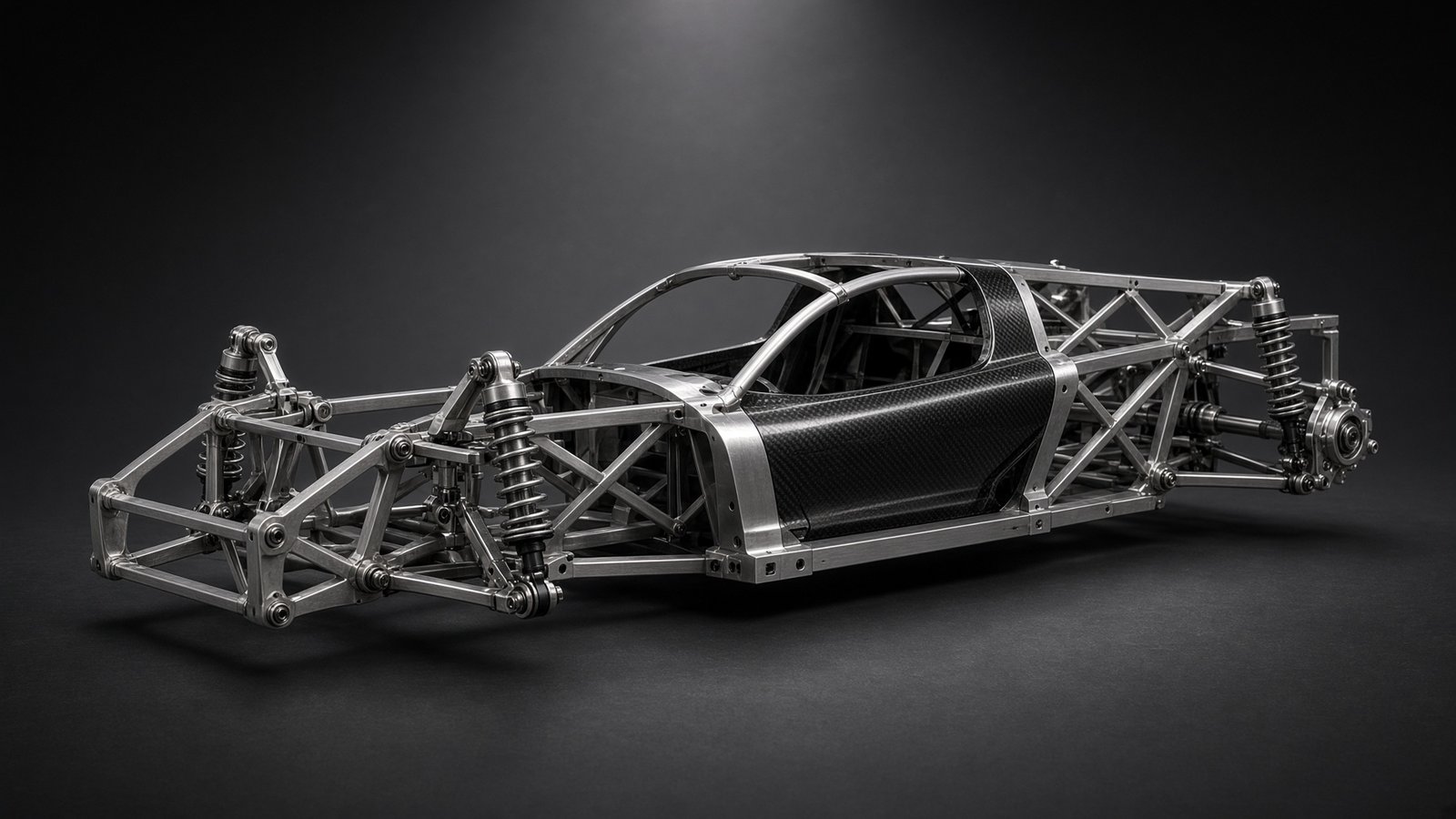
An aluminium and composite structure, with the driver set low and close to the mass. The pack and the motor live inside the wheelbase. Two materials. One rule: weight stays in the middle, and near the ground.
On the centreline
Keel architecture is our own. It pulls mass toward the spine of the car so the nose changes direction instead of arguing.
Wishbones
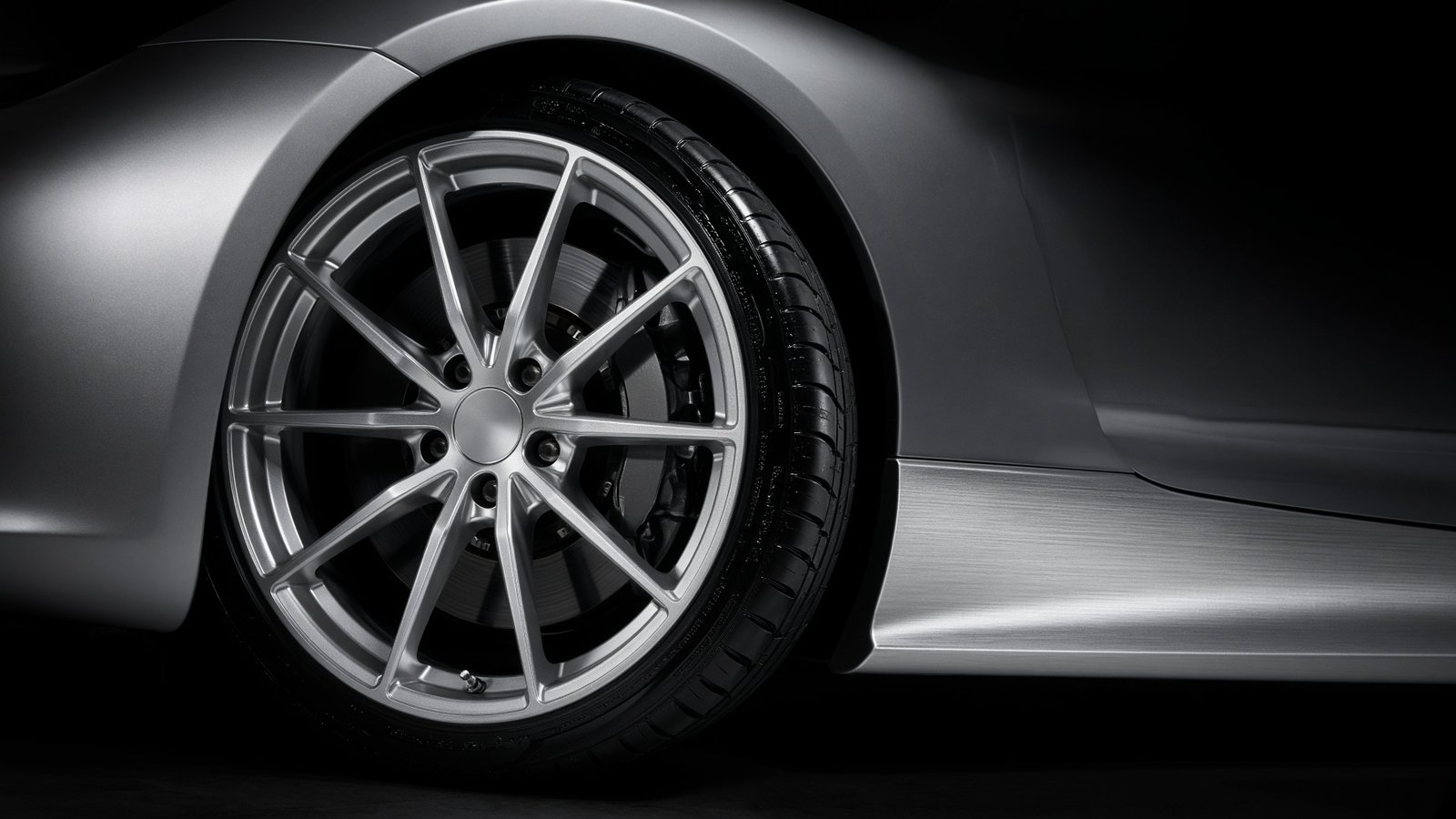
Double wishbones at every corner, dampers tuned on the lanes that leave Ashbourne. Less mass to settle. Less mass to stop.
The Compton unit
A single rear drive unit ahead of the axle line, a limited-slip differential, and torque that arrives cleanly. It does not flatten the car’s manners.
The pack
A focused 800-volt battery, sized for the car rather than a brochure. 54 kWh in the Lark, 62 kWh in the Mere. Modules a yard can actually service.
Built to be opened
Panels come off. Drawings stay on file. We would rather a fifty-year-old Ashbourne be ordinary on the road than precious in a hall.